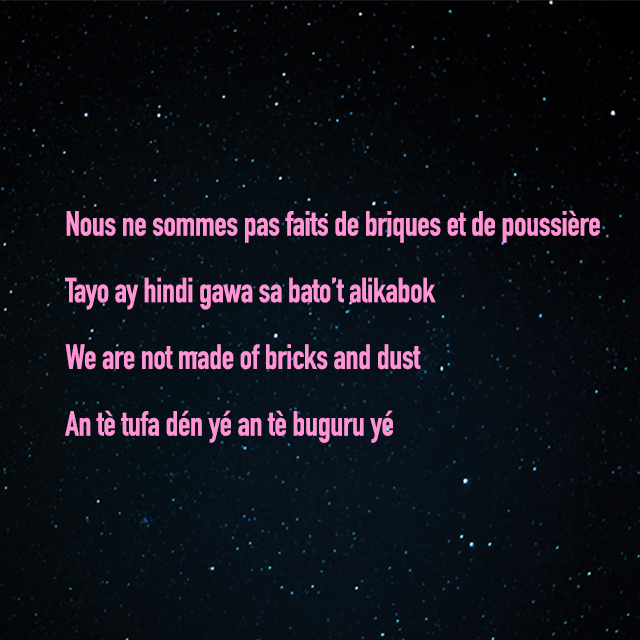
We Are Not Made of Bricks and Dust, Public art project, City of Montreal, 2019
Artists: Deann C. Louise Nardo, Felikinesis (Feliz Tupe), Kama La Mackerel, Kamissa Ma Koïta, and Odaya.
During the many times I have strolled along the streets, alleys and the parks of Tiohtià:ke/Mooniyaang/Montreal, I often think of the stories and collective memory that are connected to the buildings—bricks, staircases, walls, etc.—that define this city. What unknown tales hide behind these bricks and dust? What can they tell us? What if we took the time to listen to them? At the heart of four Montreal neighbourhoods, We are not made of bricks and dust gives voice to Indigenous, Black, People of Color, and 2SLGBTQIA+ Montrealers who honour the stories and places of communities that have been forgotten, erased and/or made invisible. These memories—explored in collaboration with groups, organizations and citizens—have been collected in a spirit of listening, sharing, learning and empowerment.
The four neighbourhoods that hosted these creations—Verdun, Petite-Bourgogne, Parc-Extension, and Côte-des-Neiges—each present a very different spatial, social and emotional geography. But one particular characteristic unifies all of them: visible and invisible boundaries. What in the late 1960s was considered as “modernization” of the city has now been transformed into a general gentrification movement, which particularly affects marginalized population groups in these neighbourhoods. Think, for example, of the Ville-Marie autoroute, Décarie Boulevard, and the highway 40 (Métropolitain), which, as imposing visible barriers, divide several neighbourhoods and create invisible borders between diasporas, and make access to essential resources—food, transportation, communities, etc.—more difficult. These are multiple realities and questions that the artists addressed throughout the summer, in the form of multidisciplinary installations and performances. The public has been invited to participate in these experiences and immerse itself in sensory and audio landscapes.
Public spaces are “sites of continual negotiation, significant resistance and social transgression.” Citizens of several generations of these diasporas try to protect the living and fluid memory of their neighbourhoods. This memory resist; it seeks to preserve gatherings’ places and the sovereignty of the body and spirit of these communities. We are not made of bricks and dust was a constantly moving project, calling upon citizens to rethink their experience and corporal connection with urban space.
- Kathleen Lord (2005). “Permeable Boundaries: Negotiation, Resistance, and Transgression of Street Space in Saint-Henri, Quebec, 1875-1905”, Urban History Review/Revue d’histoire urbaine, vol. 33 ( 2), 17–29.
Felikinesis and Deann Louise C. Nardo
Nandito tayo / We are here / Nous sommes ici
July 7 to August 10, 2019
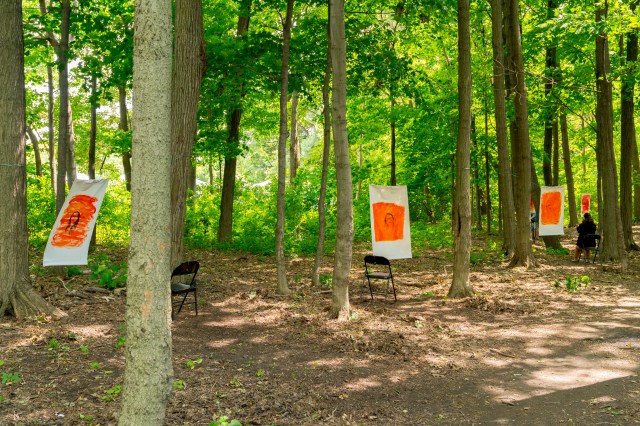
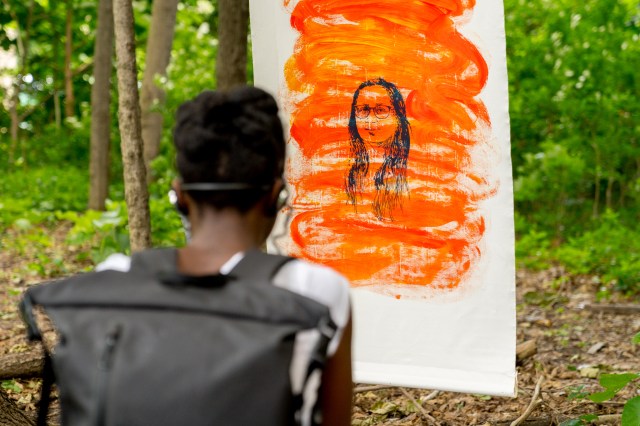
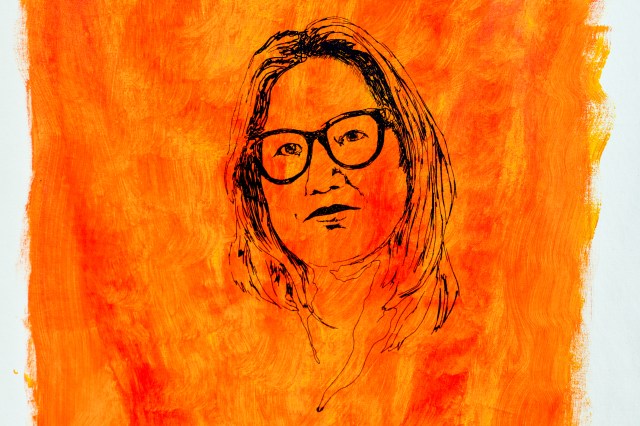
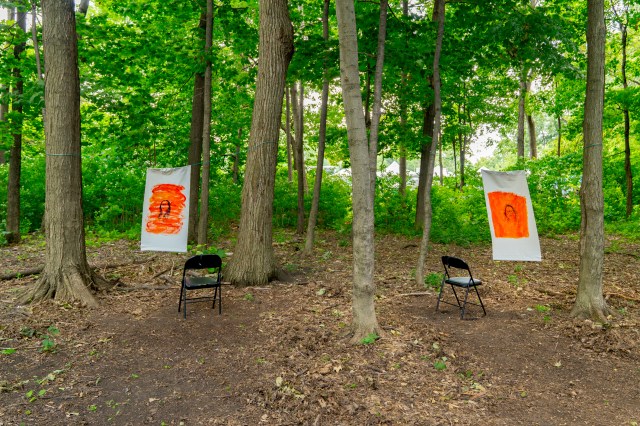
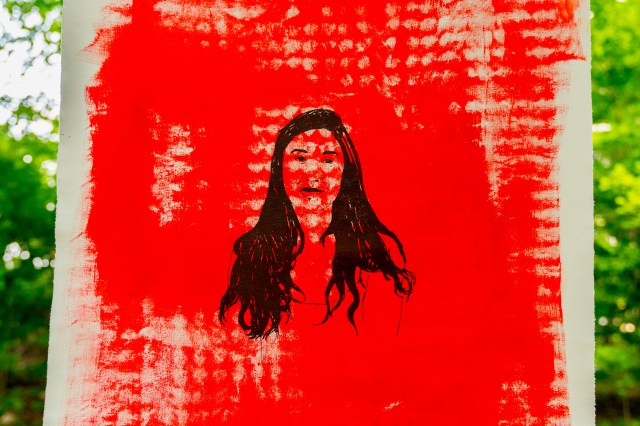
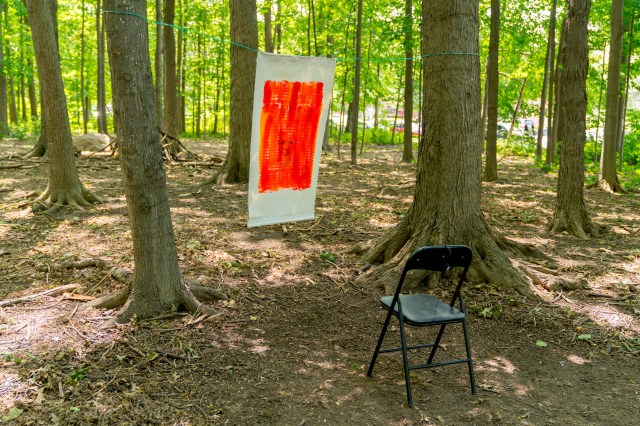
Nandito Tayo/We Are Here/Nous sommes ici, Felikinesis and Deann Louise C. Nardo, 2019. Photos credit: Jean-Michael Seminaro
Pilipinx’s artists Felikinesis (Feliz Tupe) and Deann Louise C. Nardo have joined with the PINAY organization to develop a project that is based on the collective memory and resilience of the large Filipino community in the Côte-des-Neiges neighbourhood. PINAY is a not-for-profit organization founded in 1991. It fights for the rights and well-being of women who immigrated from the Philippines, in particular for the improving of living conditions of domestic workers and their families (http://pinayquebec.org). With a view to providing a space where the community can comfortably discuss and share its experiences and feelings, Deann and Felikinesis met with about a dozen active members of this organization. They explored the impact of migration, invisible domestic work, and the visible boundaries between the daily life of these women of various generations. This participative effort reflected on the movements and transformations of their homes.
The artist duo collected audio recordings of the members, which was then matched with recordings of neighbourhood sounds. In addition, Deann and Felikinesis used drawings and serigraphy to create portraits of the participants. Finally, the public was invited to immerse themselves in a soundscape and visual landscape to celebrate the memories and stories of these participants, through the presentation of the artists’ creation in the Mackenzie-King Park on the occasion of the Pista sa Nayon community festival, organized annually by the Filipino Association of Montreal and Suburbs Inc. (FAMAS), which take place on July 14. This park is also the site of a bronze bust honouring Dr. José Rizal, a major figure of the Philippines independence movement.
Kamissa Ma Koïta
Project Burgundy
June 29 to August 4, 2019
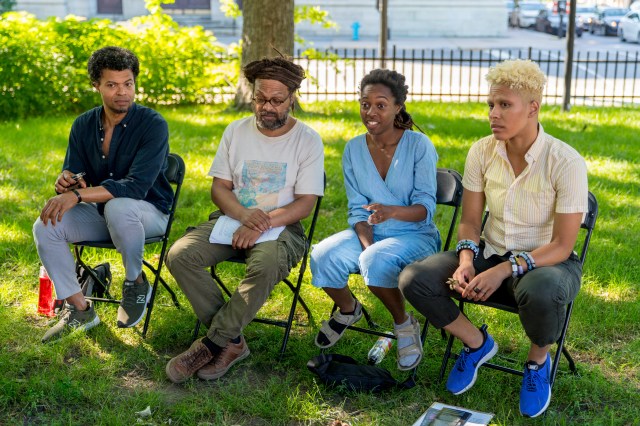
Conversation : Les mémoires oubliées de la Petite Bourgogne with the participation of Henri Pardo, Michael P. Farkas, Gabriella Kinté Garbo, and Kamissa Ma Koïta. 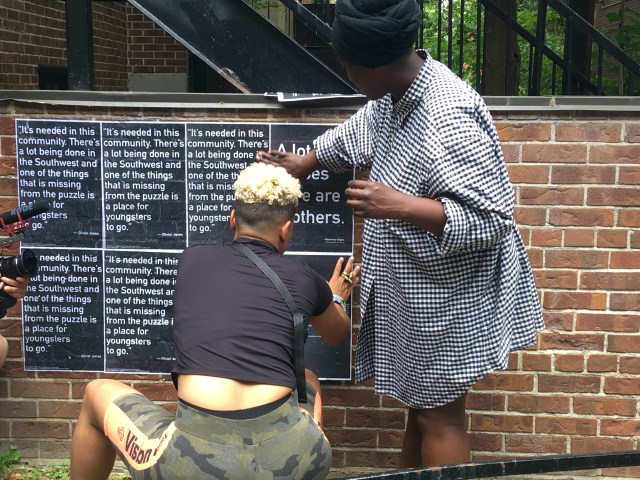
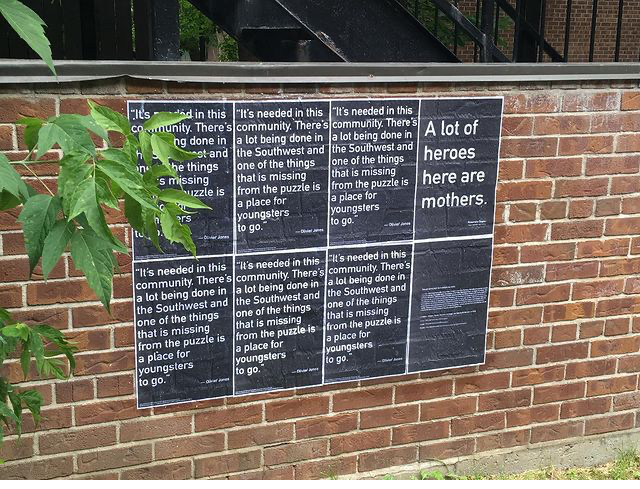
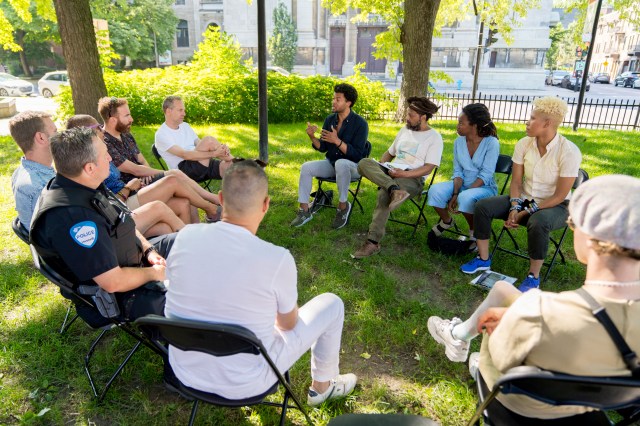
Conversation : Les mémoires oubliées de la Petite Bourgogne with the participation of Henri Pardo, Michael P. Farkas, Gabriella Kinté Garbo, and Kamissa Ma Koïta.
Kamissa Ma Koïta, Project Burgundy, 2019. Conversation : Les mémoires oubliées de la Petite Bourgogne with the participation of Henri Pardo, Michael P. Farkas, Gabriella Kinté Garbo, and Kamissa Ma Koïta. Photos credit: Jean-Michael Seminaro
The multidisciplinary artist Kamissa Ma Koïta offered a new take on the history of Black communities in the Little Burgundy neighbourhood from a decolonial perspective. Black communities began to move to the neighbourhood from the end of the 19th century, in particular due to proximity to the Canadian Pacific construction shops, where a majority of its members worked. A municipal urban renewal program in the neighbourhood during the 1960s forced the dispersion and isolation of thousands of families. Today, Little Burgundy is still experiencing gentrification, a phenomenon that increases visible boundaries between Black communities and urban space.
Project Burgundy provided a reflection of stories of Black bodies and identities that have been erased and made invisible. It invited members of these communities to walk with the artist in the public spaces of the neighbourhood. These collective tours was an opportunity to build new relationships while offering an affective and corporal experience of space that encourage the raising of questions about urban planning today. Based on archival research and documentation on the history of Little Burgundy’s Black communities, as well as discussions with participants, Kamissa created a psychogeographic map that has been installed at the Iberville Square, a park with a symbolic connotation for the residents of the neighbourhood. This map is an effort to recognize the geographic and social changes of the neighbourhood; the exercise also address toponymy by highlighting the representativeness and the cultural contribution of Black communities in the history of Little Burgundy. Project Burgundy united the voices of citizens whose words we hear all too rarely and recognize their strength and resistance.
ODAYA
Performances Serie
July 2-8, 2019
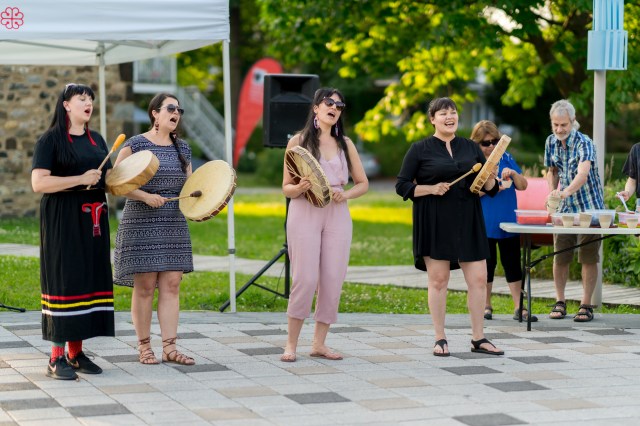
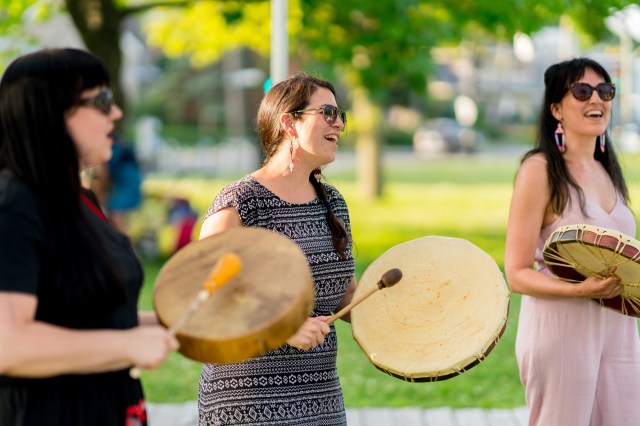
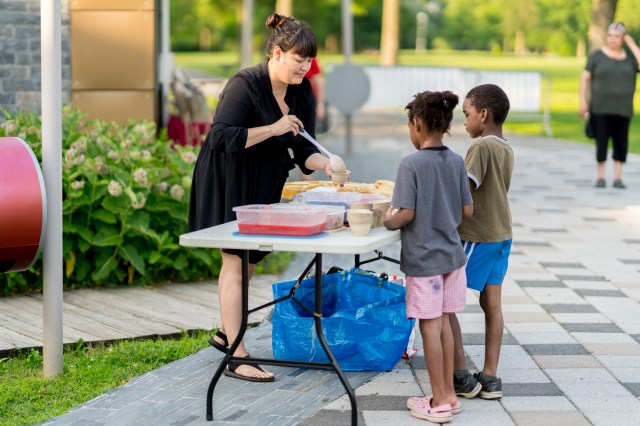
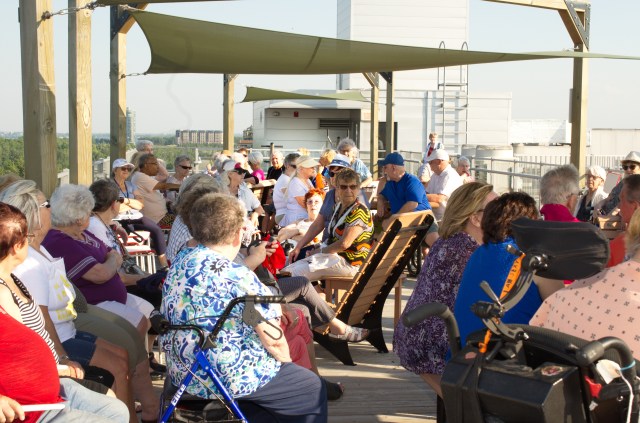
Odaya, Performances Serie, 2019. Photos credit: Jean-Michael Seminaro
Based in Montreal, ODAYA is collective of Two-Spirit, women, and non binary Indigenous artists and musicians well know for their concerts and performances that celebrate the richness of Indigenous cultures on Turtle Island. The name Odaya comes from the word odemin, which means “strawberry” in the Anishinaabemowin language. It is translated in English by “fruit of the heart” due to the form of the berry when it is sliced in two parts. The love and kinship shared among Indigenous Two-spirit, women, and non binary folks are at the heart of the performance work of this group. ODAYA participates in activities and demonstrations that raise public awareness of the rights of First Nations and calls for Indigenous spaces for folks of these communities that have been rendered invisible. In this spirit of re-appropriation and reclamation of erased urban Indigenous spaces, the collective created two performances in the Verdun borough.
Verdun is a historically important territory for Indigenous communities due to the ancestral practice of trade—which is based on the importance of creating, maintaining and celebrating relationships between nations. Today Verdun is home to a portion of Montreal’s Indigenous, Métis and Inuit residents. Surrounded by the Lachine Canal and the Saint-Lawrence River, the neighbourhood evolves with the moving memories of these waters and the rhythm of stories. ODAYA addresses sovereignty of Indigenous bodies, land stories, and shared knowledges within their performances. They invite people to gather, connect and rethink common western knowledges. By sharing traditional songs and stories, ODAYA continues the intergenerational work to activate the living memories of Indigenous communities.
Kama La Mackerel
Parc-Extension: A cartography of feelings
July 25 to August 1, 2019
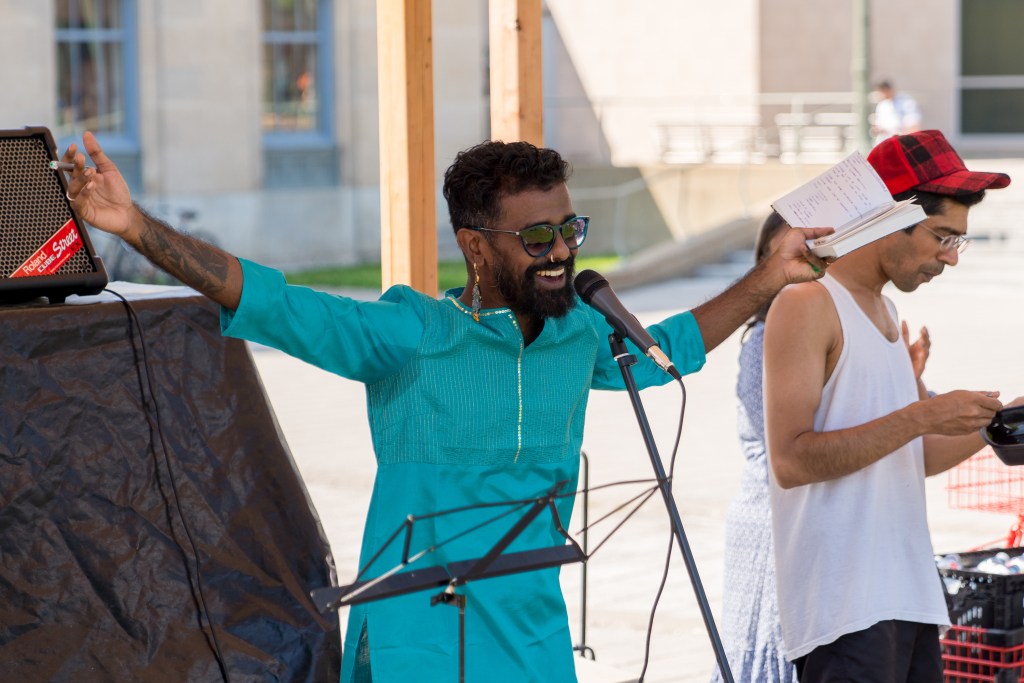
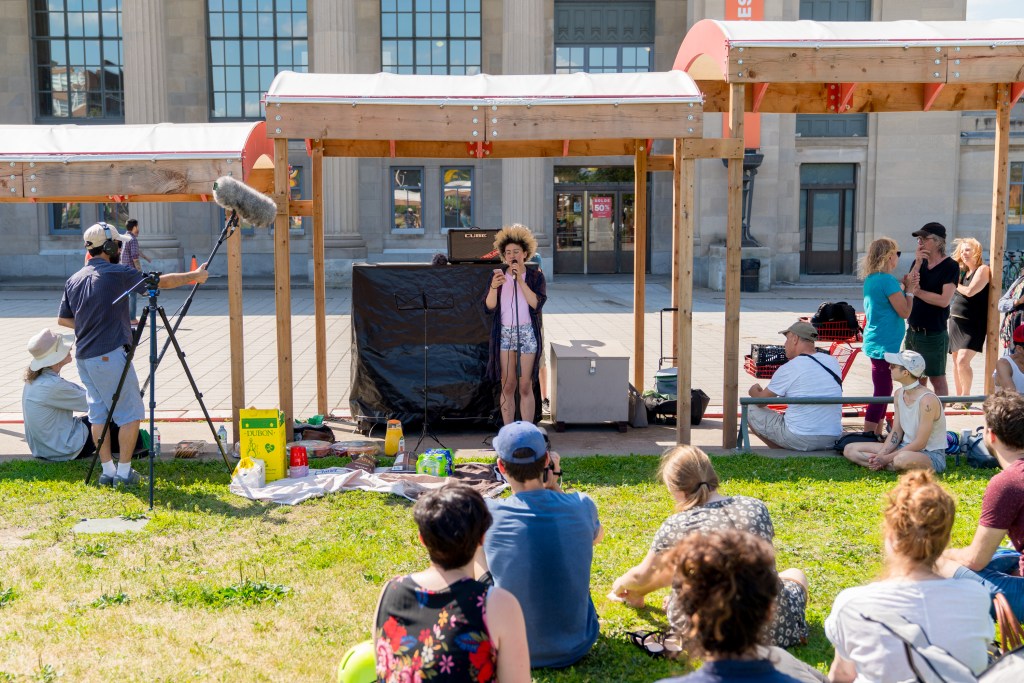
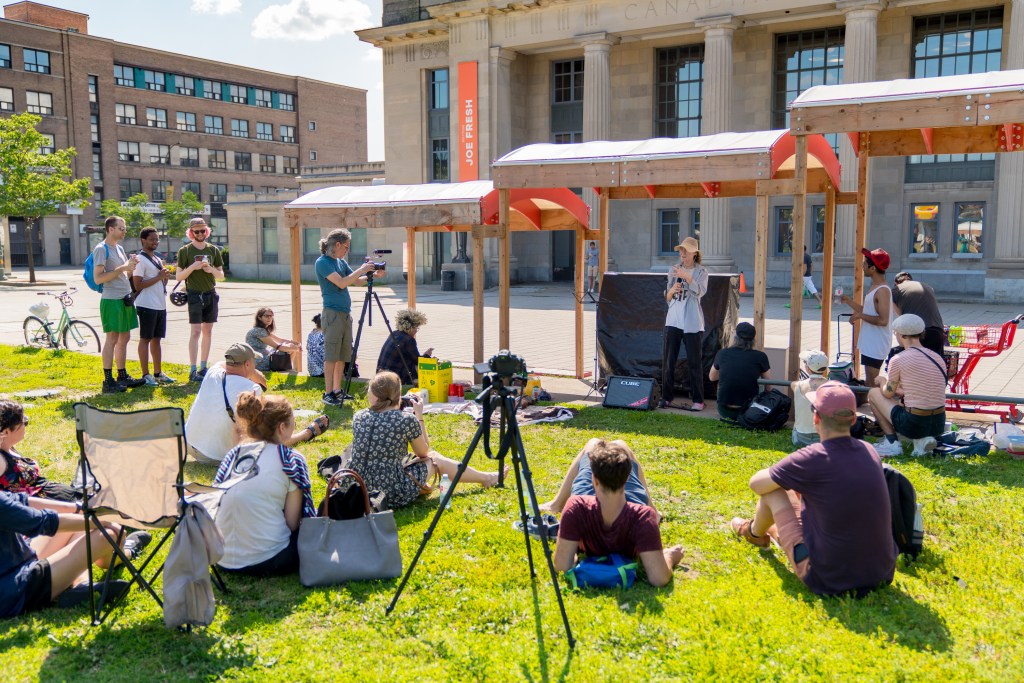
Parc-Extension & Us: Open Mic Against Gentrification, Kama La Mackerel, 2019. Photos credit: Jean-Michael Seminaro
Multidisciplinary Mauritian-Canadian artist Kama La Mackerel who is a resident of the Parc-Extension neighbourhood, invited citizens to explore the physical, emotional and social realities of gentrification with the project Parc-Extension: A cartography of feelings. Located adjacent to University de Montreal’s new campus MIL, this multicultural neighbourhood is grappling with a shortage of affordable housing and “is also one of the ‘poorest’ in Quebec. […] Almost 1,000 households in Parc-Ex are on the OMHM housing waiting list.” This stark reality is forcefully expelling many residents from the neighbourhood, particularly the most vulnerable families, which face racism and the consequences of capitalism. In these cases, the concept of “home” corresponds to a space needing strong protection, which creates a general feeling of powerlessness, but also reinforces actions of resistance and solidarity. It can also count on the support of several community organizations.
Parc-Extension: A cartography of feelings is a series of workshops facilitated by Kama. It gave a voice to Parc-Extensions’ residents in order to make sharing stories and testimonies easier. Everyone was invited to draw on their lives and memories by rethinking their emotional connections with the public spaces of their neighbourhood. Parc-Extension & Us: Open Mic Against Gentrification was then organized during an afternoon at the Place de la Gare at the Jean-Talon’s metro station where the public and community were invited to share their poetry and spoken words performances. This collective and movable project allowed for new discussions on the story of Parc-Extension’s current gentrification resistance.
 Camille Larivée